
Introduction
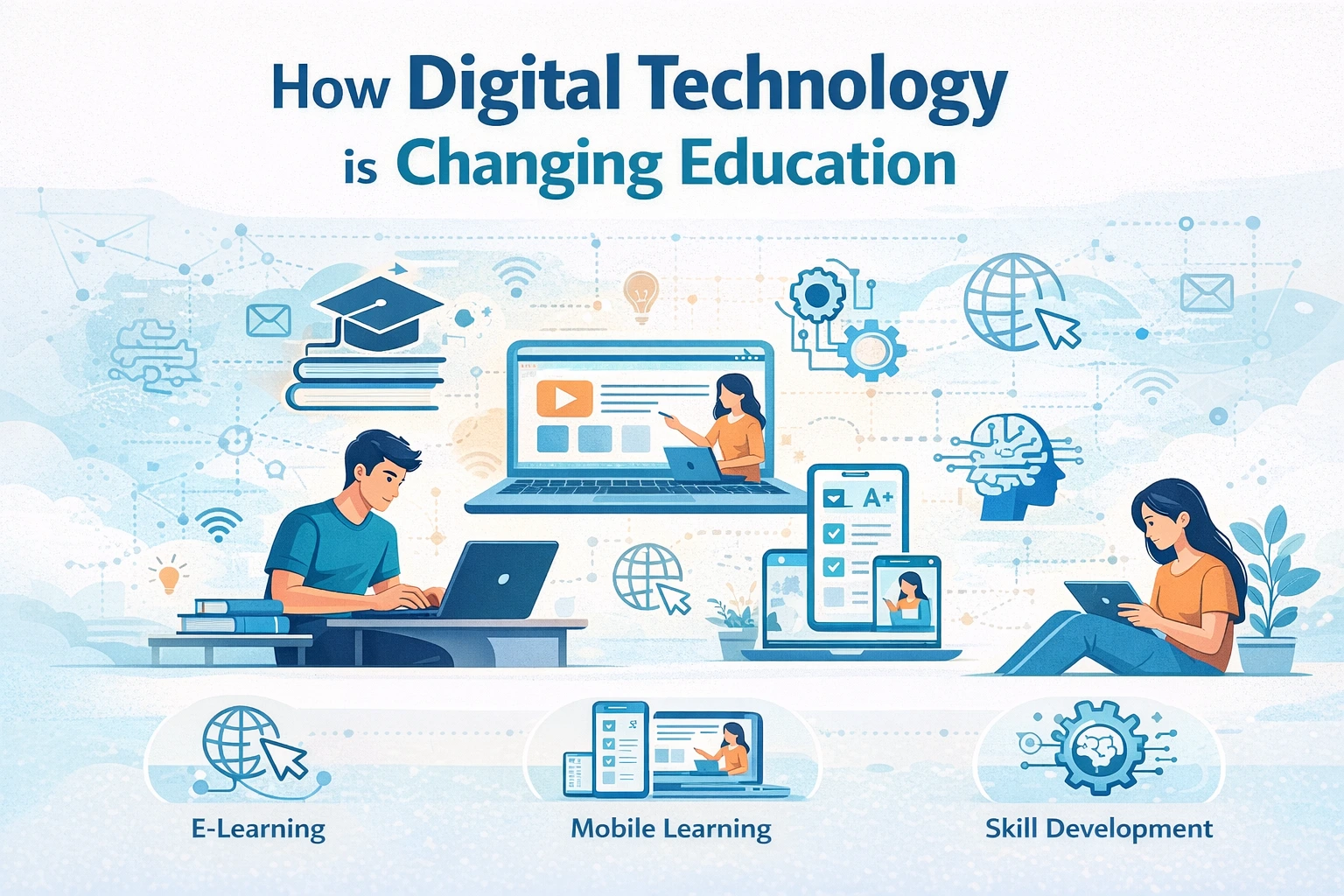
Education has changed a lot in the past few years. Earlier, students depended only on classrooms, books, and teachers. But now, with the growth of digital technology, learning has become more flexible, faster, and accessible.
Today, students can study anytime and from anywhere using the internet and digital tools. The rapid growth of the digital world is also transforming many other industries, which you can explore in How the Digital World is Changing Our Daily Life (2026).
In this blog, let’s understand how digital technology is simply impacting students and education.
What is Digital Technology in Education?
Digital technology in education means using tools like the internet, smartphones, laptops, and online platforms for learning.
In simple words:
It is the use of technology to improve the way students learn and teachers teach. Modern online platforms also use digital marketing strategies to reach students worldwide. Learn more in What is Digital Marketing: Beginner Guide.
1. Easy Access to Information
Students no longer need to rely only on textbooks.
- Search for anything on Google
- Watch educational videos
- Read online articles and blogs
This helps students learn more in less time. The future of education will become even smarter with advanced internet technologies, as discussed in The Future of the Digital World.
2. Online Learning and Courses
Online education is growing rapidly.
- Live classes and recorded lectures
- Online courses and certifications
- Learning platforms and apps
Students can now learn new skills from home. Online education is expected to become more advanced in the coming years with AI-powered systems and smart learning platforms.
3. Learning Through Mobile Devices
Smartphones have become powerful learning tools.
- Study apps
- Notes and PDFs
- Practice tests
Students can carry their study material everywhere. Mobile technology is now an important part of modern digital life.
4. Better Understanding with Visual Learning
Digital technology makes learning more interesting.
- Videos and animations
- Interactive content
- Virtual simulations
This helps students understand complex topics easily and improves engagement in classrooms.
5. Skill Development and Career Growth
Students can learn practical skills online.
- Digital marketing
- Coding and web development
- Graphic design
These skills help students prepare for future jobs and online career opportunities. Technology trends are creating many new career options for students in 2026 and beyond. You can also explore the Top 10 Digital Trends You Must Know in 2026.
6. Global Learning Opportunities
Students can learn from experts around the world.
- Online webinars
- International courses
- Global communities
This improves knowledge and exposure. Social media platforms also help students connect with educational communities globally. Read more in How Social Media is Shaping the Digital World Today (2026).
Challenges of Digital Technology in Education
While digital learning has many benefits, there are some challenges too.
Common Problems:
- Distraction from social media
- Too much screen time
- Lack of focus
- Internet dependency
Students need discipline to use technology properly and avoid digital distractions.
Importance of Safe Digital Usage
Students should use technology carefully.
- Avoid unknown websites
- Protect personal data
- Use trusted learning platforms
- Limit screen time
Safe internet usage is becoming more important as digital technology continues to grow rapidly.
Future of Education with Technology
The future of education will be more advanced.
- AI-based learning systems
- Personalized education
- Virtual classrooms
- Smart education tools
Technology will continue to improve the learning experience. Experts believe future classrooms will become more digital and automated. To understand upcoming innovations, read Future of the Digital World: What Will Change by 2030?.
Also read this post:
BGMI 4.4 Update Released: New Hero’s Crown Mode, Flying Powers, Ancient Temples & More
What is Google AI? Complete information about uses and future
Conclusion
Digital technology has changed education in a big way. It has made learning easier, more accessible, and more engaging.
However, students must use it wisely to get the best results.
If used properly, digital technology can help students build a strong future. Technology is also influencing the entertainment and gaming industries worldwide, which you can explore in Top 5 Trending Games You Must Play in 2026.
Frequently Asked Questions
What is digital technology in education?
Digital technology in education refers to the use of the internet, smartphones, computers, apps, and online platforms to improve teaching and learning experiences.
How does digital technology help students?
Digital technology helps students by providing easy access to information, online learning resources, educational videos, practice tests, and skill development courses.
What are the benefits of digital learning?
Some major benefits of digital learning include:
1. Learning from anywhere
2. Flexible study schedules
3. Access to online courses
4. Better visual understanding
5. Faster communication with teachers
How are smartphones useful for students?
Smartphones help students access study materials, attend online classes, watch educational videos, download PDFs, and practice through learning apps.